
Pregnancy for HIV-Positive Individuals Using Surrogacy
Pregnancy with HIV and AIDS
Pregnancy for women living with HIV or AIDS has always been a medical and social challenge. Because there is a possibility of mother-to-child transmission, many people oppose pregnancy for these women. Additionally, depending on the severity of the disease and the woman's immune system, pregnancy can sometimes be dangerous for her. Fortunately, various ways now exist to solve this problem so that women living with AIDS can have children like any other woman. Using a surrogate mother (gestational carrier) is one of these solutions. Join us as we explore surrogacy for women living with AIDS in this article.
What is Surrogacy? Is This Method Legal in Iran?
Surrogacy is one of the newest infertility treatment methods in Iran and many countries worldwide. In this method, another woman, other than the child's genetic mother, takes on the responsibility of carrying the fetus in her uterus. The 9 months of pregnancy take place naturally within the carrier's body, and the newborn is delivered to the intended parents after birth.
This method is used for couples where the woman, for various reasons such as general health, uterine problems, or other factors, is unable to carry a fetus in her own womb. If women living with AIDS cannot have a safe and natural pregnancy, the surrogacy method can be used for them.
Surrogacy is completely legal in Iran and is also religiously acceptable, provided that human dignity is maintained and no illegitimate relationship is created between unrelated men and women.
Challenges of Pregnancy for Women Living with HIV
Pregnancy for women living with AIDS can involve several problems and challenges:
- Transmission Concerns: One of the biggest worries is the possibility of transmitting the disease to the fetus. Despite antiretroviral treatments and the reduction of transmission risks, the virus may still be transmitted to the fetus in some cases.
- Medical Complexity: Pregnancy for women with AIDS is more complex and difficult compared to women without the disease. These women must undergo precise and regular medical treatments to ensure their health and the health of the fetus throughout the pregnancy. This can be challenging and difficult for some.
- Immune System Impact: Pregnancy in some women with high viral loads and poor general health can further affect the body's immune system.

The Process of Surrogacy for Women Living with AIDS
Pregnancy via surrogacy is performed alongside assisted reproductive technologies like IVF. In this method, the egg is taken from the genetic mother and the sperm from the father, and fertilization takes place in a laboratory environment. After the embryo is formed, it is transferred to the surrogate mother's uterus. In this method, prior to artificial fertilization, the man and woman can take specific medications under a specialist's supervision to strengthen the egg and sperm, increasing the chance of a successful pregnancy.
In this process, HIV-positive women must start antiretroviral therapy (ART) several months before the procedure. These medications bring the viral load in the body to undetectable levels. This reduces the possibility of the retrieved egg being infected to less than 1%. If the mother's egg does not have the necessary quality, donor eggs can be used. In that case, the genetic father's sperm is combined with a donor egg in the lab, and the resulting embryo is transferred to the surrogate. The couple can review the donor's genetic information (skin color, eye color, height, etc.) to choose someone with the most resemblance to themselves.
Ethical and Social Challenges of Surrogacy
A very important issue regarding surrogacy for HIV-positive women is the surrogate mother's full awareness of the situation. In surrogacy, medical monitoring is carried out strictly to ensure the pregnancy proceeds without problems for the volunteer woman. The surrogate mother must be fully familiar with the conditions and the process and make her decision without any pressure. However, some women may hesitate upon learning about the genetic mother's illness. These women can utilize medical counseling to be assured that pregnancy through this method will pose no risk to them.
Advantages of Surrogacy for Women Living with HIV
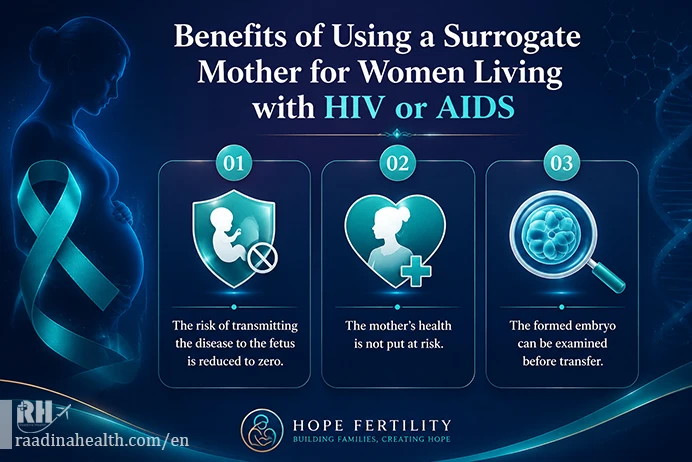
- The risk of disease transmission to the fetus or the surrogate is virtually zero.
- The genetic mother's health is not put at risk by the physical demands of pregnancy.
- Embryos formed via IVF can be genetically screened before transfer. This ensures a healthy embryo is transferred to the surrogate's uterus.
Official Contract Between Parties
Currently, there is no single specific law governing every detail of surrogacy in Iran. Consequently, a precise and official contract must be signed between the parties before starting any procedure, including IVF in Iran or surrogacy arrangements. The duties of both parties must be fully specified and mentioned. Payment methods, delivery of the child after birth, the surrogate's commitment to medical care and testing, and other matters should be stated in the contract by an experienced lawyer and signed by both parties.
Summary
Surrogacy is a recognized infertility treatment in Iran and much of the world. In this method, when the genetic mother cannot carry a pregnancy, another woman carries the fetus for the 9-month term. This is a safe and suitable option for women living with HIV who have low ovarian reserve or for whom pregnancy could be detrimental to their health.
Get a free consultation, precise treatment planning, dedicated support, and a personalized medical travel roadmap. Contact the experts at Raadina medical tourism company today.
Contact us for a free initial consultation about Pregnancy for HIV-Positive Individuals Using Surrogacy
 WhatsApp
 Telegram
 Facebook
 Email
Email
Frequently Asked Questions
Is there a risk of virus transmission from the mother to the newborn?
By using antiretroviral treatments and strict monitoring, the chance of transmitting the virus to the child becomes nearly zero.
Is there a risk of transmitting the virus to the surrogate mother?
No, this method poses no risk of infection to the gestational carrier.
Is surrogacy legal in Iran?
Yes, surrogacy is legal in Iran under specific conditions, and couples who are unable to conceive or carry naturally can use it.
Are antiretroviral drugs dangerous for HIV-positive mothers during the process?
No, these medications are safe for the mother and help significantly in reducing the viral load to ensure a healthy start.



No reviews
Your comment