
Why Is My Creatinine High After Kidney Transplant?
Kidney Transplant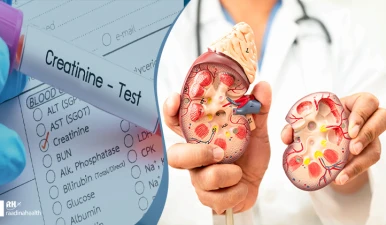
Kidney transplantation is an advanced and effective treatment for kidney failure. This method frees the individual from restrictions and dialysis, largely returning them to a normal life. After kidney transplant surgery, the person must be regularly monitored so that necessary actions can be taken in case of a risk of kidney rejection. An increase in urea and creatinine is one of the very important symptoms that can act as an alarm. Therefore, blood creatinine levels must be measured to investigate any dysfunction in the new kidney. Join us as we explore this topic in detail.
Meaning of Creatinine Levels in Transplant Patients
The creatinine level (Cr) is a key biochemical indicator that is very important for checking the function of the transplanted kidney. Creatinine is a byproduct produced from the natural breakdown of creatine in the muscles. A healthy kidney filters these substances and excretes them through urine. In a kidney with unhealthy function, this does not happen, and blood creatinine levels increase. An increase in creatinine levels can indicate vascular problems, infection, or drug toxicity, in addition to being a warning sign of kidney rejection. If the creatinine level is normal and stable, it means the transplanted kidney is filtering the blood well.
What Should Creatinine Levels Be After Kidney Transplant Surgery?
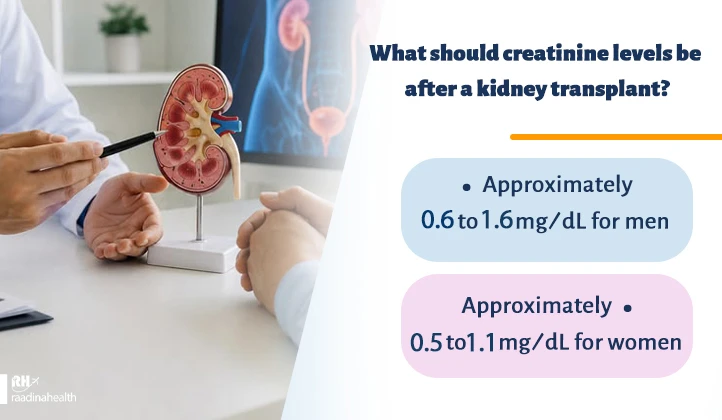
After kidney transplant surgery, the creatinine level should be in a normal range similar to that of healthy individuals and should stabilize at the lowest possible value. Of course, this level depends on various factors such as age, gender, muscle mass, and the patient's baseline level. Generally, the normal creatinine range for male and female adults is as follows:
- Approximately 0.6 to 1.6 mg/dL for men
- Approximately 0.5 to 1.1 mg/dL for women
Note that the important point is the stability of the creatinine number within this range. This means that if the creatinine level suddenly increases or decreases, you must inform the doctor immediately.
Symptoms of High Creatinine After Kidney Transplant
As mentioned above, a rise in blood creatinine indicates that the kidney is not filtering the blood well. This condition is usually accompanied by other symptoms, such as pain or tenderness over the transplanted kidney, fever, swelling (edema), especially around the eyes and legs, weight gain, decreased urine output, high blood pressure, unusual fatigue and weakness, nausea, and loss of appetite. Some people also notice changes in urine color or foamy urine.
If you ignore these warning signs, you may face serious consequences such as advanced kidney damage, the need for dialysis, or a repeat kidney transplant. Therefore, take these symptoms seriously and contact your doctor or transplant team as soon as possible if you notice them.

Reasons for Increased Creatinine After Surgery
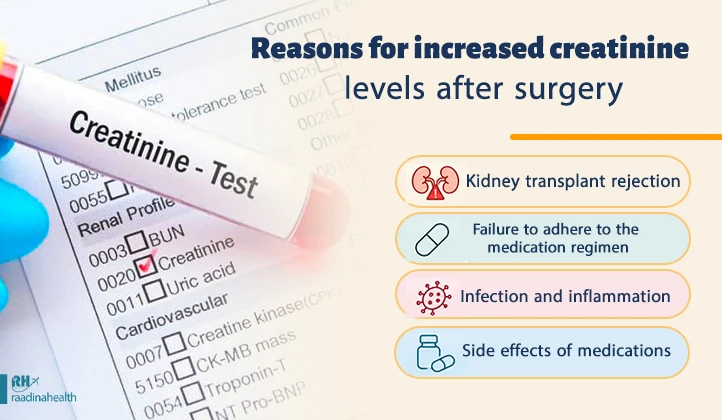
Increased creatinine after kidney transplant surgery can have various reasons, which are listed below:
- Kidney Transplant Rejection: This complication is the most important cause of increased creatinine in the body. Transplant rejection means the body does not accept the new kidney and rejects it. The main reason for kidney rejection is genetic incompatibility.
- Non-compliance with Medication Regimen: After kidney transplant surgery, the body considers the new kidney as a foreign agent, and the immune system fights it. Therefore, immunosuppressant drugs are among the important medications that must be taken after the transplant. Irregular consumption of these drugs increases the risk of kidney rejection and elevated blood creatinine.
- Infection and Inflammation: If you do not follow post-operative hygiene care well, the wound site may become infected and inflamed. The resulting infection stimulates the immune system, leading to kidney rejection and increased creatinine.
- Medication Side Effects: Medications after kidney transplant can have side effects such as increased blood pressure or digestive problems. In rare cases, these drugs may also affect kidney function and increase creatinine.
Diagnostic Tests for Normal Creatinine Levels
To ensure the healthy function of the kidney after a transplant, monitoring must be performed periodically. Important and specialized monitoring methods include:
- Frequent Blood Tests: Including regular monitoring of urea and creatinine.
- Kidney Biopsy: Which is usually performed three to six months and then one year after the transplant. This method is the most accurate way to determine the main cause of kidney dysfunction after a transplant.
- Kidney Ultrasound: To evaluate the blood flow in the new kidney.
- Tissue Matching and Blood Grouping: Which is performed to investigate a better match between the kidney tissue and the new body.
Proper Diet for Controlling Creatinine
Following a healthy, nutritious, and suitable diet helps significantly in increasing the lifespan of the new kidney and maintaining its function. Drinking sufficient water and other beneficial, sugar-free fluids helps kidney function and the excretion of waste products. Fruits, vegetables, whole grains, and legumes lead to a decrease in creatinine levels. After a kidney transplant, individuals must avoid alcohol and tobacco. It is also recommended that food be consumed grilled or steamed.

When Should You See a Doctor?
The timing of a doctor's visit is very important. If any suspicious symptoms are observed, you should see a doctor as soon as possible so that there is enough time for treatment in case of any problems. The following symptoms are red flags that require a visit to a specialist after being observed:
- Fever above 37.3°C
- Sudden weight gain within 24 hours
- Severe pain in the area of the new kidney
- Decreased amount of urine excretion
- Flu-like symptoms
Summary
Kidney transplant surgery is a very complex operation, and post-operative care is just as important and vital as the surgery itself. Patients who choose a kidney transplant in Iran should pay close attention to the follow-up plan as well as the surgical team. After the operation, the patient must be monitored regularly so that any problem can be identified early and a doctor can be consulted promptly. The blood creatinine level is one of the most important markers in this monitoring, and a rise in it indicates that the transplanted kidney is not functioning normally. In this case, the necessary therapeutic measures must be taken.
Get a free consultation, precise treatment planning, dedicated support, and a personalized medical travel roadmap. Contact the experts at Raadina medical tourism company today.
Contact us for a free initial consultation about Kidney Transplant
 WhatsApp
 Telegram
 Facebook
 Email
Frequently Asked Questions
Why does creatinine fluctuate after a kidney transplant?
Creatinine may fluctuate due to dehydration, infections, medications, changes in blood flow to the kidney, or problems with the transplanted kidney. Small changes do not always indicate a serious problem, but a persistent or significant rise from your usual baseline should be evaluated by your transplant team.
Is a creatinine level of 2.5 high after a kidney transplant?
A creatinine level of 2.5 mg/dL may be considered elevated, but its significance depends on your usual creatinine level, previous results, and overall kidney function. A level of 2.5 is more concerning if it represents a clear increase from your stable baseline and should be discussed with your transplant team.
When should I worry about a rise in creatinine after a kidney transplant?
A persistent or unexplained rise in creatinine, especially when accompanied by decreased urine output, fever, swelling, vomiting, or feeling unwell, should be reported to your transplant team. Changes in kidney function are sometimes detected on blood tests before noticeable symptoms appear.
Can dehydration increase creatinine after a kidney transplant?
Yes. Dehydration can reduce blood flow to the transplanted kidney and temporarily increase creatinine levels. However, transplant patients should follow their medical team's recommendations regarding fluid intake rather than increasing fluids on their own.
Can a urinary tract infection increase creatinine after a kidney transplant?
Yes. A urinary tract infection, particularly when it affects the transplanted kidney, can impair kidney function and cause creatinine to rise. Because transplant recipients take immunosuppressive medications, infections should be diagnosed and treated promptly.
Which medications can increase creatinine after a kidney transplant?
Some medications can raise creatinine or affect kidney function, including tacrolimus, cyclosporine, NSAIDs, and certain antibiotics. Never stop or change an anti-rejection or other prescribed medication without consulting your transplant team.
Is an increase in creatinine an early sign of kidney transplant rejection?
It can be. An unexplained rise in creatinine may be an early sign of kidney transplant rejection, but creatinine alone cannot confirm rejection. Further blood tests, imaging, and sometimes a kidney biopsy may be required to determine the cause.
Can creatinine increase temporarily after a kidney transplant?
Yes. Creatinine can rise temporarily because of dehydration, infection, certain medications, or other short-term changes affecting kidney function. If the level remains elevated or continues to increase, further evaluation is needed to rule out problems such as rejection or impaired graft function.

No reviews
Your comment