
Getting Back to Everyday Life After Kidney Transplant
Kidney Transplant
A kidney transplant is a very important milestone in the lives of individuals with failure in this organ. The quality of life improves significantly after the operation, and individuals can return to a normal daily life like others. However, the long-term success of this procedure requires consistent post kidney transplant care, which must be fully observed. In fact, an individual must consider limitations and important factors in their exercise, work, and daily lifestyle to ensure the transplanted kidney is never rejected. Join us as we explore the lifestyle after kidney transplant in detail.
When Can Normal Exercise Be Started?
After a kidney transplant and passing the recovery period, individuals feel more energetic and wish to increase their physical activity. Regular and principled exercise after kidney transplant surgery can be very beneficial for general body health. Immediately after the transplant, patients are asked to walk a little. Walking after the surgery greatly helps reduce swelling and increases the speed of recovery.
In the first six weeks, strictly avoid lifting heavy objects. During this period, light exercises such as pedaling on a stationary bike and brisk walking on a treadmill are suitable. Do not engage in intense or strenuous exercise until twelve weeks after the operation. Note that any exercise must be started gradually, increasing the intensity from low to high.
Permitted and Prohibited Activities After Kidney Surgery
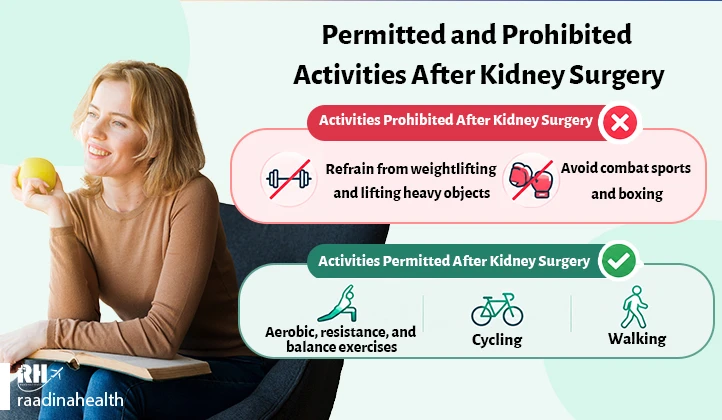
Individuals do not have many limitations or prohibitions after a kidney transplant; they can even perform some sports professionally. However, ensure that at least twelve weeks have passed since the operation and start physical activity at a light and low level.
- Prohibited Activities: Sports with a possibility of a direct blow to the abdomen and kidney area, such as martial arts and boxing, are prohibited both in the first 12 weeks and thereafter. Also, individuals must avoid sports like weightlifting and lifting heavy objects. The exercise environment should ideally not be hot and humid, and individuals must drink plenty of water during exercise.
- Permitted Activities: Recommended activities are numerous and varied. Walking and cycling are two excellent sports for health after a transplant. Also, aerobic, resistance, balance, and flexibility training are recommended and permitted for kidney transplant patients.
Returning to Work After Kidney Transplant
The normal life of most people includes work; therefore, after a kidney transplant, individuals wish to return to their normal professional life. Returning to work must be done in consultation with a doctor, evaluating all environmental risks and physical pressures.
Generally, individuals should not return to work before the first six weeks. After that, the patient's physical condition and working conditions must be accurately evaluated, and a doctor must confirm that the person is fit to work. Note that certain occupations—such as those requiring physical force or jobs where the individual is exposed to direct sunlight—are prohibited for transplant patients.
Managing Fatigue and Stress
Statistics show that many individuals experience emotions such as anxiety, depression, and even guilt after a kidney transplant. This major life change unconsciously creates shifts in the person's psyche and mood, which can negatively affect both physical and mental health.
- Physical Management: If you feel severe and persistent fatigue, inform your doctor. Ensure you get enough rest; for example, sleep at least eight hours a night. Start exercise in short durations with low intensity so the body can gradually adapt.
- Mental Management: If you experience unpleasant feelings such as anxiety or guilt, talk to a psychologist, family member, close friend, or other transplant patients. Talking to trusted individuals, especially counselors, helps significantly in managing and controlling these emotions.
Consumption of Anti-Rejection and Other Medications
One of the vital aspects of lifestyle after a kidney transplant is the consumption of anti-rejection medications. You must know that anti-rejection drugs are medications you must take regularly for the rest of your life, as the possibility of rejection exists even years later. Of course, the dosage of medications is gradually reduced.
Doctors also check kidney function through regular blood tests. Monitoring your creatinine level after kidney transplant is one of the most common ways to detect early changes in how well the new kidney is working, so any unexpected rise should be reported to your doctor promptly. Furthermore, you must consult your doctor before taking any other medication, even a simple painkiller, as it may cause drug interactions.
Proper Diet After Kidney Transplant
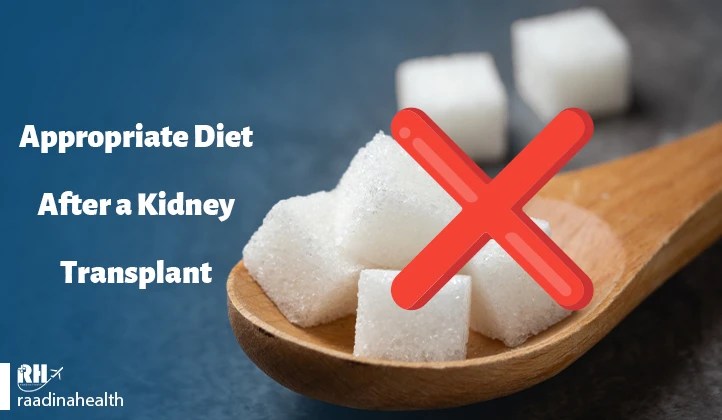
Nutrition after a kidney transplant is very important. Individuals must avoid excessive consumption of salt and sugar. Furthermore, the consumption of certain foods like pomegranate and grapefruit (or their juices) is prohibited, as they increase the risk of kidney transplant rejection. Also, the consumption of raw or undercooked foods including meat, fish, eggs, and shellfish is prohibited. It is better to consume these items fully grilled or steamed.
Permitted and Prohibited Vaccines
After kidney transplant surgery, you must never receive vaccines containing live or weakened viruses, such as chickenpox, yellow fever, rubella, or polio. Vaccines containing inactivated or dead viruses, such as influenza and tetanus, are permitted at the doctor's discretion.
Skin and Eye Care After Kidney Transplant
Kidney transplant patients are at a higher risk for skin cancer than other people. Consequently, avoid sun exposure after the transplant and always use an appropriate sunscreen if you leave the house. Some doctors recommend that individuals apply sunscreen even while at home. Furthermore, based on medical advice, it is better for individuals to undergo an eye exam at least every two years after a transplant.

Diabetes and Weight Control
One of the common side effects of post transplant medications is diabetes. Therefore, after this operation, individuals must maintain a low-sugar diet to prevent the onset of diabetes. Exercise combined with a proper diet will significantly help in controlling weight and preventing surgical complications.
Summary
For patients who choose Kidney Transplant in Iran, long-term success depends on various factors such as precise medication consumption, regular medical monitoring, an appropriate diet, and a healthy lifestyle. In fact, while the individual largely returns to a normal life, there are still limitations that must be observed.
Get a free consultation, precise treatment planning, dedicated support, and a personalized medical travel roadmap. Contact the experts at Iran health agency today.
Contact us for a free initial consultation about Kidney Transplant
 WhatsApp
 Telegram
 Facebook
 Email
Frequently Asked Questions
Can the consumption of anti-rejection drugs be stopped after a while?
No, the consumption of these drugs is lifelong and essential; only the dose will gradually decrease.
What sports and activities should be strictly avoided after a transplant?
Sports with a risk of direct blows to the abdomen, such as boxing and martial arts, and weightlifting.
Under what conditions should one visit a doctor immediately?
If you observe warning signs such as decreased urine output, high fever, abdominal pain, sudden weight gain, and feelings of severe fatigue.
When can I return to work?
This depends on the individual's physical condition and work environment. However, returning to work before the first six weeks is prohibited.
What should be done if dental procedures are needed?
Before invasive dental procedures like tooth extraction, an appropriate antibiotic must be taken as prescribed by the doctor.
What about sexual activity after a kidney transplant?
Sexual activity is prohibited until full recovery and before approximately six to eight weeks. After recovery, protected sexual activity is not an issue.

No reviews
Your comment