
Kidney Transplant Surgery: Diagnosis, Post-Op Care
Kidney Transplant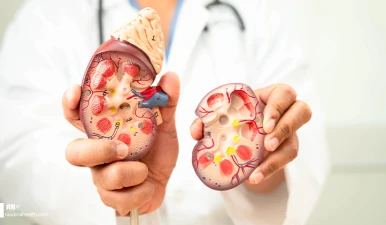
Kidney transplant is a complicated surgery, in which a healthy kidney from a living or deceased donor is transplanted into a patient with end-stage renal disease (ESRD). Despite being complex, this surgery is widely performed in Iran and other countries by adept surgeons. This operation increases the patient’s quality of life and lets them live a normal, healthy life. Of course, the success of this surgery depends on how well the patient follows the surgeon’s guidelines and takes care of their body after the surgery.
In this article, you will learn about the ups and downs of kidney transplant surgery and probably find the answer to your questions.
What Is Kidney Transplant Surgery?
Kidney transplant is a lifesaving surgery for people with end-stage kidney disease. In this major operation, the surgical team places a healthy kidney received from a donor in the patient’s body. The new kidney is connected to the recipient’s blood vessels and usually begins filtering blood and producing urine right after surgery.
It’s interesting to know that the patient’s original kidney is usually left intact and the new kidney is placed in the lower abdomen, near the pelvic bone.
How Is Kidney Transplant Surgery Performed?
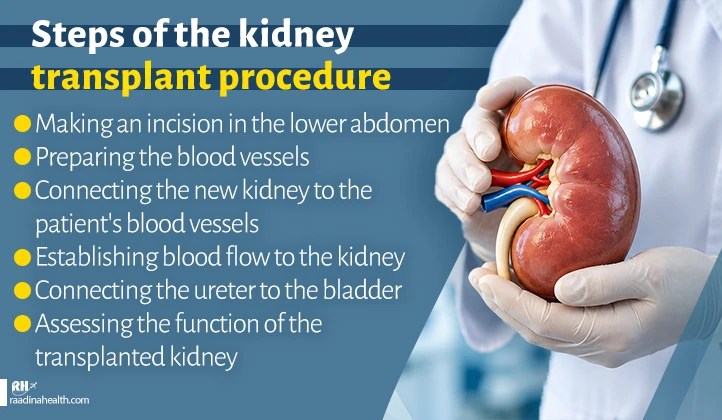
Kidney transplant is a special surgery that usually takes 2-4 hours. In this operation,
- First, the surgeons make an oblique incision in the lower quadrant of the abdomen and move aside the layers of skin and tissue to have better access to the iliac vessels in the pelvis.
- Then, they clamp the internal iliac artery and external iliac vein with vascular clamps (like bulldog clamps) to temporarily stop blood flow.
- Next, the donor kidney’s artery and vein are connected to the recipient’s blood vessels through a procedure called anastomosis. This helps blood flow normally throughout the kidney.
- Finally, the renal pelvis and the proximal end of the ureter (the tube that transfers urine from the kidney to the bladder) are connected to the bladder.
- Note that if the patient’s own kidney doesn’t cause high blood pressure, infection, pain, or kidney stones, it can be left in place.
Different Types of Kidney Transplant
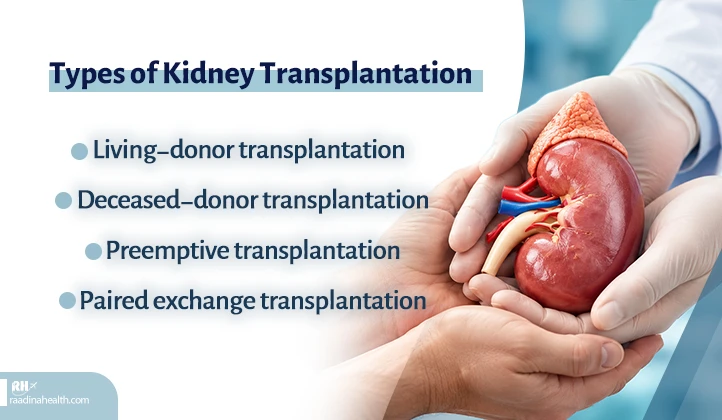
Depending on the condition of the recipient and donor, kidney transplantation is done in one of the following ways:
Kidney from a living donor: In this method, the donor can be a parent, sibling, or another person who is not blood-related to the patient. This type of transplant has the highest success rate compared to other kidney transplant options.
Kidney from a deceased donor: in this technique, the kidney is taken from a brain-dead person. Of course, consent from the donor’s family is legally and ethically necessary.
Preemptive transplant: This surgery is performed before the patient undergoes dialysis. Numbers show that transplanted kidneys last longer in patients who receive them before starting dialysis.
Paired kidney exchange (kidney swap): If your donor is incompatible with you, their kidney is given to another recipient and you receive a kidney from that person’s donor. This procedure is also called a kidney donor chain.
Why Is a Kidney Transplant Needed?
Kidneys are two bean-shaped organs located on either side of the spine, just below the ribs. Their main job is to filter waste and toxins from the blood and remove them from the body through urine. If the kidneys don’t work properly, waste and toxins stay in the body and put the person’s health at risk. In severe cases where the kidneys stop working, patients need dialysis or a kidney transplant.
Doctors usually recommend surgery when the kidneys have lost about 90% of their function. Several conditions can lead to kidney failure, including high blood pressure, diabetes, kidney stones, vesicoureteral reflux (VUR), drug addiction, and polycystic kidney disease.
Possible Risks of Kidney Transplant Surgery
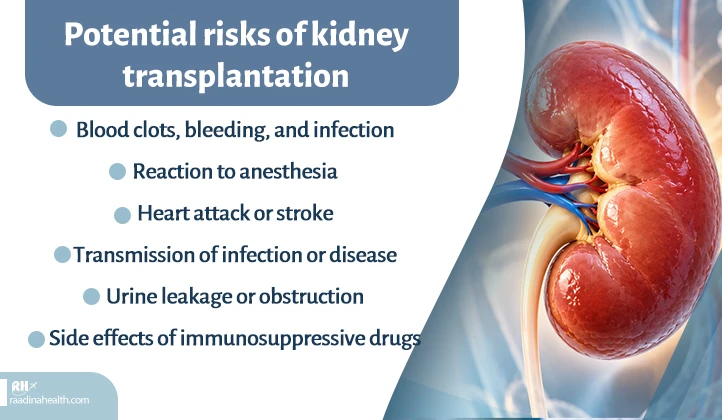
Just like any other major surgery, kidney transplant can have risks and side effects. Although some of them are inevitable, you’d better be aware of them. Here are 8 possible risks associated with this operation:
- Blood clots in the legs or the kidney’s blood vessels
- Allergic reactions to anesthesia
- Severe bleeding or infection at the surgical site
- Stroke or heart attack
- Getting infections, cancer, or other diseases from the donor kidney
- Urine leakage or blockage in the ureter (the tube that carries urine from the kidney to the bladder)
- Side effects of immunosuppressant medications (AKA anti-rejection medicines)
- Narrowing or leakage at the point where the ureter connects to the bladder
Pros and Cons of Kidney Transplant Surgery
Kidney transplant surgery can have lots of advantages for the patient, including:
- It improves the patient’s quality of life.
- Patients no longer need to spend 4 hours on dialysis three days a week.
- Some fertility issues are resolved after the transplant.
- Studies show that people with a transplanted kidney live longer than those who remain on dialysis.
- They will have fewer dietary restrictions. This means they can have potassium and salt.
- In the long run, a kidney transplant will also reduce overall treatment costs.
However, kidney transplant surgery has some drawbacks too, such as:
- Anti-rejection medications are expensive, and patients usually need to take them for the rest of their lives.
- Anti-rejection medications weaken the immune system to prevent it from attacking the transplanted kidney. However, they also make the body more vulnerable to infections and other diseases.
- Steroids can also cause weight gain, facial puffiness, bone loss, and mood changes.
- The body may reject the transplanted kidney, even years after surgery.
Main Side Effects of Kidney Transplant
Some of the complications of a kidney transplant include:
- Narrowing of the kidney artery
- Bleeding after surgery
- Blood clots
- Rejection of the transplanted organ
- Scarring or stiffness of the transplanted kidney
- Fever
- Reduced urine volume
- High blood pressure
- High cholesterol
- Increased risk of cancer
- Increased risk of developing diabetes
Who Are Not Good Candidates for Kidney Transplant?
Although this surgery is the best treatment for kidney failure, it is not suitable for everyone. The procedure may be risky for people:
- Over 70 years old
- Suffering from severe heart disease
- Having cancer or having recently been treated for it.
- Having HIV or hepatitis
- Having severe mental health conditions, like dementia
- Having untreated infections
- Having gastrointestinal ulcers
In these cases, the doctor may decide that a kidney transplant is too risky.

Latest Kidney Transplant Techniques in Iran and Around the World
It might be interesting to know that Iran ranks first in the Middle East in the number of kidney transplant surgeries performed. Kidney transplant in Iran is also known worldwide for its high number of non-relative donors. Also, the majority of donated kidneys in Iran come from non-relative donors, which is what made Iran famous worldwide. Moreover, about 80% of kidney transplants in Iran use kidneys from living donors. These factors have made Iran a popular destination for kidney transplants, especially for international patients.
Fortunately, new medical techniques have increased the success rate of kidney transplants. For example, if the donors and recipients have incompatible blood types, they can undergo different medical treatments before and after surgery to reduce the risk of rejection. Also, the living donor’s kidney is now removed laparoscopically. This is a minimally invasive technique that involves a few small incisions; therefore, the recovery time is shorter and the side effects will be limited.
Tests and Evaluations before Kidney Transplant
The surgeons order the following tests to measure the success rate of this surgery:
- Evaluation of the donor kidney to make sure it’s functioning and is healthy
- Crossmatch testing to check whether the recipient has antibodies against the donor
- Tests to find infectious and transmissible diseases
- Compatibility testing between the donor and recipient
- Urine tests
- Blood tests
- Imaging tests, such as MRI, X-rays, or CT scans
- Kidney biopsy
- Ultrasound of the kidneys, bladder, and urinary tract
- Tests for latent tuberculosis (TB infection)
- Blood electrolyte tests
- Testing coagulation factors
- Tissue typing to check whether the donor and recipient are compatible
Kidney Transplant Steps: From Admission to Discharge
Patients are usually admitted to the hospital one day before kidney transplant surgery. While they are in the hospital, the healthcare staff shave the surgical area, make sure the patient doesn’t eat solid food before the procedure, insert an intravenous (IV) and a urinary catheter, and ask the patient to sign the consent form and other legal papers.
The surgery is performed under general anesthesia by a specialist surgeon. After the procedure, the patient is transferred to an isolation room to reduce the risk of infection.
The patient should stay in the hospital for about a week. During this time, the medical team monitors the amount of urine produced to check how well the transplanted kidney is working. Some kidneys start producing urine immediately, while others may take several days to work normally. In such cases, the patient should be dialysed temporarily until the kidney starts filtering the blood. Before discharge, the medical team explains how and when to take anti-rejection medications and how to take care of the body after the surgery.
How Long Does a Kidney Transplant Surgery Take?
Kidney transplant surgery usually takes about 3 to 4 hours. If the donor is alive, the surgery to remove the donor kidney is performed at the same time in a nearby OR and takes about two hours. Keep in mind that preparing for the surgery and recovery also take time.
What Is the Success Rate of a Kidney Transplant?
Luckily, kidney transplant surgery has a high success rate. The transplanted kidney survival rate is around 95% during the first year and 85% during the next three years. If the donor is a family member, the success chances are even higher.
What Factors Affect the Success Rate of Kidney Transplant?
Several factors can affect the success of a kidney transplant:
- Age: Younger patients, especially those under 45, have a better chance.
- Donor type: A kidney from a living donor, especially a family member, increases the success rate.
- Taking medications regularly: Anti-rejection medications must be taken exactly as prescribed. Even missing a day's dose can lead to serious complications.
- Overall health and lifestyle: A balanced diet, regular exercise, and avoiding smoking can help the kidney stay healthy and viable.
- Treating underlying conditions: Conditions such as diabetes and high blood pressure must be carefully controlled after surgery because they can damage the transplanted kidney.
How Long Does a Transplanted Kidney Last?
Several factors affect how long a transplanted kidney lasts, including those mentioned above. However, studies show that a transplanted kidney usually lasts about 12 to 15 years. If the transplanted kidney eventually stops working, the patient can undergo a second or even a third kidney transplant.
In some cases, a kidney from a living donor, especially a close relative, can continue working for more than 25 years. Of course, this number depends on how well the recipient follows post-op care instructions and whether they take their medications as prescribed or not.

Important Post-Operative Care Instructions
Post-operative care plays an important role in the success of a kidney transplant. Here are the most important ones:
- Do not lift heavy objects or drive for up to six weeks after surgery.
- Avoid sexual intercourse for one month after surgery.
- Avoid becoming pregnant for at least one year after the transplant.
- Maintain good hygiene to reduce the risk of infection. Wash your hands frequently and avoid touching dirty surfaces.
- Take anti-rejection medications regularly. Although the dosage is gradually reduced, you should take them for life.
- Have a healthy lifestyle. Eat a balanced diet, avoid smoking and drinking alcohol, and exercise regularly.
- Contact your doctor or go to the ER if you have severe pain or a sudden decrease in urine volume.
The Final Words
A kidney transplant is one of the best treatments for kidney failure. The kidney can come from either a living donor or a deceased (brain-dead) donor. Before surgery, both the donor and the recipient should take several compatibility tests to decrease the risk of organ rejection. Kidney transplant surgery has a high success rate and can improve a person's quality of life.
Get a free consultation, precise treatment planning, dedicated support, and a personalized medical travel roadmap. Contact the experts at Iran health agency today.
Contact us for a free initial consultation about Kidney Transplant
 WhatsApp
 Telegram
 Facebook
 Email
FAQs
Is a kidney transplant dangerous?
Kidney transplantation is a major surgery, but it is safe when performed by experienced surgeons at a reliable medical center.
Can all patients with kidney disease undergo a kidney transplant?
No. Only patients with chronic kidney disease are eligible candidates for a transplant. They should also be healthy (have no underlying condition), don’t have untreated infections, and their heart should be healthy.
How is a kidney transplant from a deceased donor performed?
First, the kidney is removed from a brain-dead donor, after their family has given consent. Then, compatibility tests are done on the kidney to make sure it will not be rejected by the recipient’s body. Finally, the kidney is transplanted into the recipient’s body, near the pelvic bone.
Is it possible to get a kidney from an animal?
Scientists are still researching animal-to-human organ transplants. So, this technique is not yet a standard treatment for kidney failure.
Is there a difference between a living donor and a deceased donor?
A kidney from a living donor usually starts working sooner and may last longer. A kidney from a brain-dead donor might behave differently depending on how long it took to transplant it and how the kidney is preserved before surgery.
What Is an artificial kidney? Is it used in Iran?
An artificial kidney is a device that does some or all of the work of a natural kidney. This technology is still being developed and tested, so it’s not yet available in Iran.
What can cause death after a kidney transplant?
Some complications can be life-threatening after a kidney transplant, including severe infections, organ rejection, medication-related side effects, and heart problems.
Will I have pain after kidney transplant?
The procedure is performed under general anesthesia, so you will not feel any pain during surgery. The pain during recovery can also be managed with sedatives.
Why do infections and fever happen after a kidney transplant?
Anti-rejection medications weaken the immune system, so the body gets more vulnerable to infections. A high fever can be a warning sign of infection and needs immediate medical attention.
Are hair loss and skin problems normal after a kidney transplant?
Yes. Hair loss and skin problems are side effects of transplant medications. In many cases, these problems go away when the doctor adjusts the medication doses.

No reviews
Your comment