
What are the early signs of kidney failure?
Kidney Transplant
Chronic kidney diseases, observed in about 10% of the population, have specific symptoms. Familiarity with these signs can facilitate immediate diagnosis and the timely initiation of treatment. If feelings of weakness, fatigue, nausea, or shortness of breath are accompanied by signs such as changes in the appearance and volume of urine or swelling of the hands and feet, there is a possibility of kidney failure. In this article by Raadina Health, the most common symptoms of kidney disease and treatment options, particularly kidney transplant, will be examined.
When Do the Kidneys Fail?
Kidney failure occurs when one or both kidneys cannot perform their optimal functions, including filtering blood and removing toxins from the body, and their efficiency drops to less than 15% of normal performance. Kidney dysfunction may be sudden (acute) or occur gradually (chronic); however, in either case, it disrupts the process of regulating the balance of electrolytes and body fluids as well as urine production.

Signs of a Healthy Kidney
Kidney health can be inferred from the proper functioning of several other body organs. Some signs of a healthy kidney include:
- Normal Urination: Urine should be light and clear in color and discharged at appropriate intervals throughout the day.
- Standard Urea and Creatinine Levels: Medical tests should not indicate abnormal levels of blood creatinine or urea.
- Absence of Flank Pain: Healthy kidneys do not inherently cause pain or discomfort in the back or flanks.
- Absence of Edema: Healthy kidneys prevent swelling caused by fluid retention in the hands, feet, and ankles.
- Stable Blood Pressure: Well-regulated blood pressure is a sign of healthy kidney function.
Early Symptoms of Kidney Failure
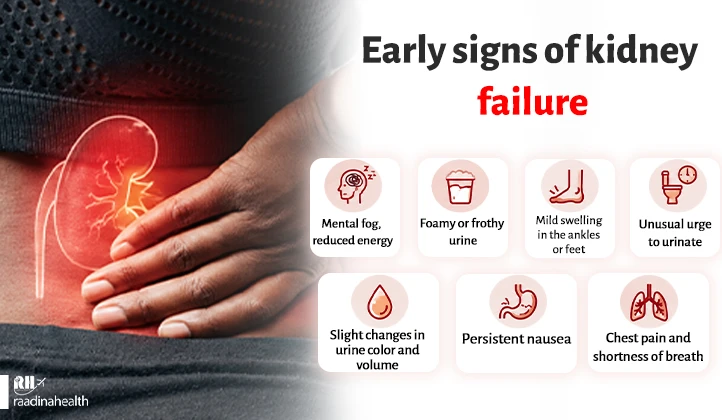
As kidney function becomes impaired and failure sets in, the following early symptoms may gradually appear over time:
- Distraction, decreased energy, and feelings of fatigue and weakness.
- Presence of bubbles or foam in the urine.
- Slight swelling in the ankles or feet.
- Needing to urinate more or less than usual.
- Slight changes in the color and volume of urine.
- Persistent nausea.
- Chest pain and shortness of breath.
Symptoms of Acute Kidney Failure
Acute kidney failure refers to a sudden and severe disruption of the kidneys, which usually manifests with more serious symptoms. The individual may experience extreme weakness and fatigue accompanied by confusion, along with a sudden decrease or even total cessation of urine output. The feet, hands, and area around the eyes swell rapidly, and sometimes the swelling reaches the lungs. There is also a possibility of abdominal pain, severe nausea or vomiting, irregular heartbeat, chest pain, seizures, and coma.
Symptoms of Mild Kidney Failure
In mild kidney failure, clear signs may not be observable without medical tests. However, there is still a possibility of slight changes in urination patterns and the discharge of small amounts of foam or blood. The individual may experience some fatigue and decreased energy, as well as minor digestive problems like mild nausea. Slightly elevated blood pressure and mild swelling are other common signs.
Stages of Kidney Disease Progression
The progression and intensification of kidney disease are measured based on a criterion called the Glomerular Filtration Rate (GFR) in ml/min per 1.73 , which includes the following stages:
- Stage 1: GFR rate equal to or greater than 90, accompanied by symptoms such as protein or blood in the urine.
- Stage 2: GFR rate between 60 and 89.
- Stage 3 – Substage A: GFR rate between 45 and 59.
- Stage 3 – Substage B: GFR rate between 30 and 44.
- Stage 4: GFR rate between 15 and 29.
- Stage 5: GFR rate less than 15 or the need for dialysis treatment.
Additionally, based on the Urine Albumin-to-Creatinine Ratio (ACR), the following three levels are determined:
- Level 1: ACR less than 30 mg/g.
- Level 2: ACR between 30 and 299 mg/g.
- Level 3: ACR greater than 300 mg/g.

How Long Until the Kidneys Fail?
It is impossible to say exactly how long it takes for a kidney to fail. The duration of failure for kidneys with chronic disease can last 30 to 50 years. In individuals with underlying conditions such as diabetes, this interval is often between 10 and 15 years. However, in acute kidney failure, depending on the patient's various conditions, kidney function usually lasts between a few months to a few years. Ultimately, everything depends on the treatment process and underlying factors.
When Does a Doctor Suggest a Transplant?
Doctors usually recommend that when a patient’s GFR rate falls below 20 ml/min, a kidney transplant should be considered as the final treatment solution. Early referral (about 6 to 12 months before the predicted start of dialysis) can provide sufficient time to find a suitable donor and perform the relevant tests. Many patients also research the process, requirements, and centers for kidney transplant in Iran before dialysis becomes necessary, so they can make their decision with more confidence.
Definitive Treatment for Kidney Failure
There is no definitive and effective treatment that returns the function of failing kidneys exactly to their pre-disease state. However, several useful treatment methods have been introduced that help increase the individual's quality of life and lifespan, including:
- Medical Treatment: Using Lisinopril and related medications to treat blood pressure, heart failure, and diabetes.
- Dialysis: Using hemodialysis or peritoneal dialysis to help filter the blood and remove toxins.
- Kidney Transplant: Receiving a healthy kidney from a suitable donor for transplantation into the patient.
Both dialysis and transplantation can help people with kidney failure, but the choice between kidney transplant vs dialysis depends on each person’s age, underlying health conditions, and physical condition, and the final decision rests with a specialist physician.
For younger patients, a transplant also means getting back to normal life, and many wonder about marriage after kidney transplant and starting a family. After the procedure, taking medications regularly, eating well, and attending routine follow-ups are essential. Sometimes a transplanted kidney fails after many years, and a second kidney transplant may then be considered.

Medical and Herbal Treatment for Kidney Failure
The use of certain medicinal herbs such as green tea, rhubarb, ginger, and dandelion is effective in reducing the symptoms and complications of kidney failure or increasing the patient's life expectancy. Additionally, some traditional Chinese and Indian medicine treatments use herbs like Astragalus or compounds with antioxidant and anti-inflammatory effects. Nevertheless, the consumption of herbal medicines must also be performed under the supervision of a specialist physician and tailored to the patient's condition.
Suitable Foods for Kidney Failure
The best diet for kidney patients includes a combination of fresh vegetables and fruits, appropriate proteins and carbohydrates, healthy fats, and foods with controlled amounts of salt and spices. Cabbage, carrots, cauliflower, grapes, apples, pineapples, and various berries help with better kidney function by reducing inflammation. Soy, cooked legumes, white rice, and white bread are better alternatives to heavy animal proteins and whole grains. Olive and rapeseed oils are also more suitable for patients with heart problems.
Contact us for a free initial consultation about kidney transplant
 WhatsApp
 Telegram
 Facebook
 Email
Frequently Asked Questions
What are the signs of kidney failure in a blood test?
An increase in urea and creatinine levels and a decrease in eGFR, along with electrolyte disturbances such as phosphorus and potassium, are signs of kidney failure in a blood test.
Is kidney failure curable?
Kidney failure does not have a definitive cure or full recovery; however, with medication and methods such as dialysis or kidney transplantation (if necessary), one can help increase the patient's health and lifespan.
Does kidney failure cause shortness of breath?
Yes; in some cases, the individual suffers from shortness of breath due to fluid accumulation in the lungs and the resulting swelling (pulmonary edema).
Does kidney failure cause frequent urination?
Changes in the volume and frequency of urination are complications of kidney failure, which in some people manifest as a decrease and in others as an increase and frequent urination—especially nocturia (nighttime urination).
Does kidney failure cause death?
In acute cases, kidney failure may directly cause the patient's death. However, early diagnosis and the initiation of appropriate treatments can sometimes increase the patient's life by decades.
Do kidney problems cause leg pain?
Yes, various kidney problems can cause pain in the flanks and back, which may radiate to the legs. Additionally, swelling caused by kidney failure can result in a sensation of pain in the legs.
Does kidney disease cause itchy skin?
Yes, itchy skin is a common symptom of kidney disease, especially in its advanced stages, and individuals undergoing dialysis treatment generally experience this complication.

No reviews
Your comment